Purpose
The purpose of this program is to address identified HIV care and treatment gaps among high-risk subgroups and work towards epidemic control in Zimbabwe through improving access to HIV prevention, care and treatment services for high-risk population in Zimbabwe. This project is under the Zimbabwe Partnership to Accelerate AIDS Control (ZimPAAC) consortium, where Pangaea Zimbabwe is a partner, working through direct support and established, sustainable and collaborative relationships with MOHCC, NAC and other stakeholders.
Target Population
High- risk Populations

Key Strategies
Health system strengthening & capacity building: Train and mentor healthcare workers and community cadres to deliver friendly, inclusive services for high-risk populations and strengthen facility–community referral pathways.
Biomedical HIV prevention & innovation: Scale PrEP (oral PrEP) literacy, initiation and continuation; pilot and create demand for new biomedical prevention products such as CAB-LA at public sector sites; expand HIV self-testing.
Community engagement & demand creation: Use peer support groups, community cadres and integrated outreach to build trust, raise awareness and mobilise high-risk subgroups to access services.
Integrated HIV care & treatment: Strengthen linkages between community platforms and OI/ART clinics to ensure timely initiation, retention and viral suppression.
Mental health integration: Screen for common mental disorders and provide Problem-Solving Therapy (PST) using the Friendship Bench model as part of comprehensive care.
Monitoring, data & quality improvement: Actively monitor PrEP continuation and ART outcomes, use data to inform program adjustments and sustain high-quality service delivery.
Major Activities
Capacity building
Trained over 400 healthcare workers and 85 community cadres across 23 supported public sector facilities in Harare to deliver services friendly to high-risk populations.
Strengthened facility readiness and community trust in specific public sector facilities, improving accessibility.
HIV prevention
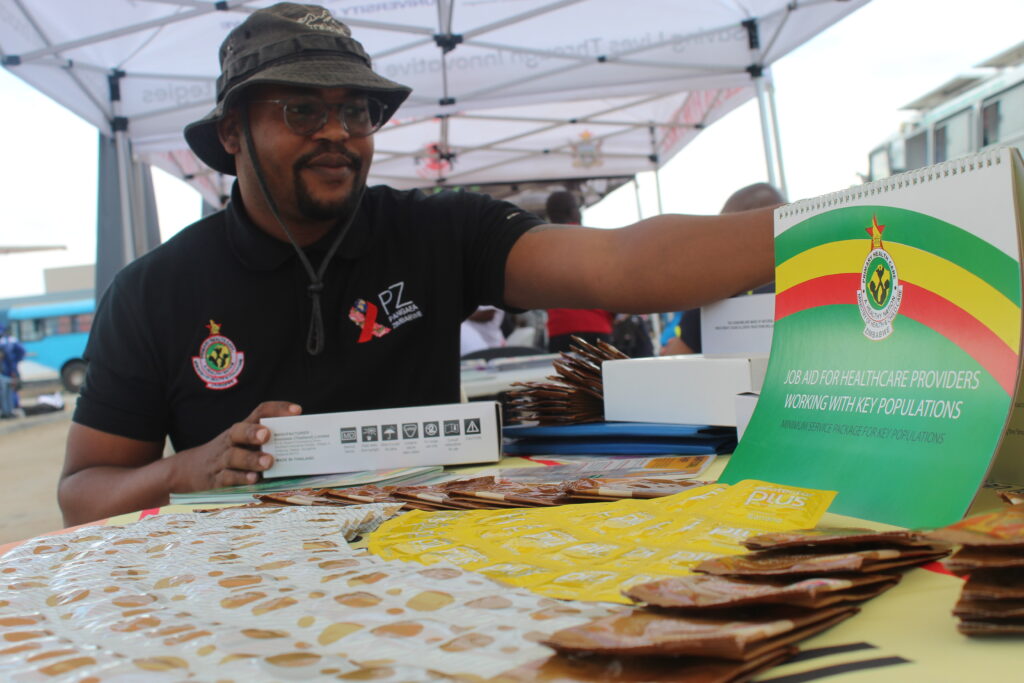
Condom distribution: Distributed over 2 million condoms across 85 sites.
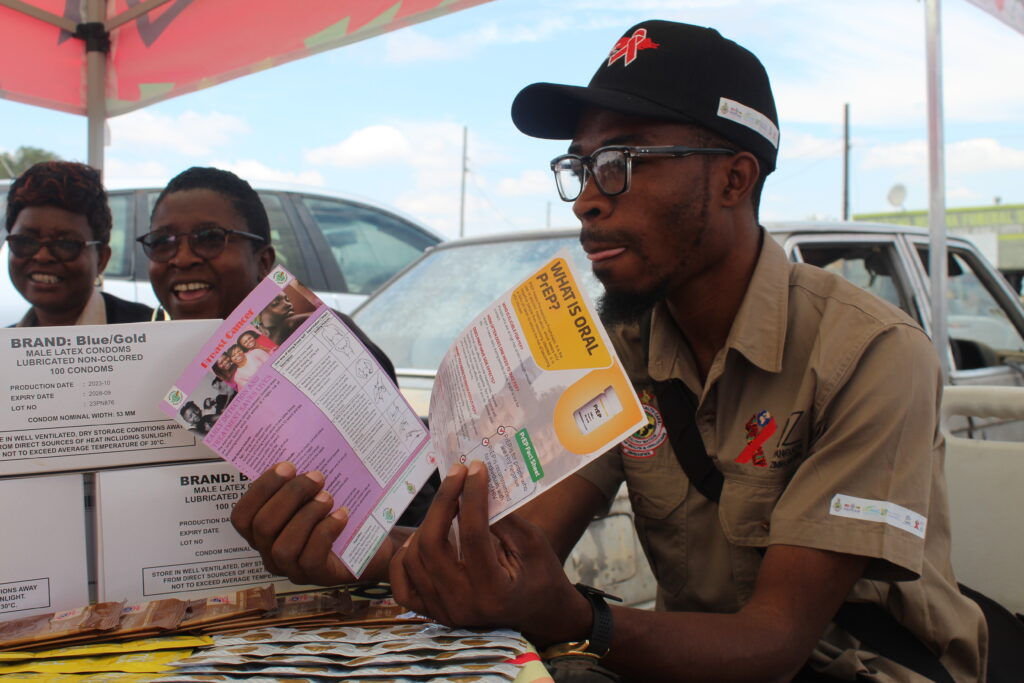
PrEP literacy & demand creation: Reached more than 10,000 high-risk subgroups with PrEP literacy sessions via face-to-face and virtual platforms.
PrEP linkages & initiations: Linked at least 70% of HIV-negative individuals in high-risk subgroups to PrEP. PrEP initiations in the 20 supported districts increased from 1,815 in 2020 to 12,172 in 2024.
PrEP continuation support: Actively monitored PrEP continuation and fostered community support through PrEP support groups achieving a 52% continuation rate at month 1.
New biomedical prevention products: Created demand for CAB-LA, piloting it at 3 public sector sites.
Result: Improved overall understanding of HIV prevention and reduced risky behaviour.
HIV care & treatment
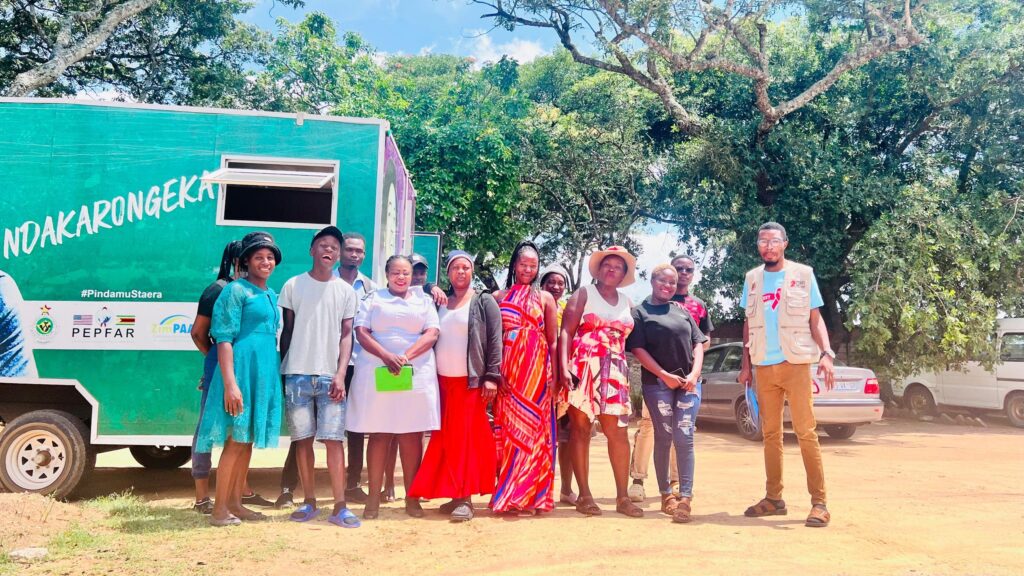
Delivered over 1,000 integrated outreach initiatives, engaging and educating 34,350 high-risk individuals on available HIV services.
Distributed more than 4,000 HIV self-test kits through facility and community platforms.
Screened more than 2,600 clients for STIs, with 99% linkage to treatment for the 875 (33%) who were STI-positive.
Strengthened ART adherence and support through peer support groups, with at least 95% of group participants achieving undetectable viral load or low viremia.
Mental health & psychosocial support
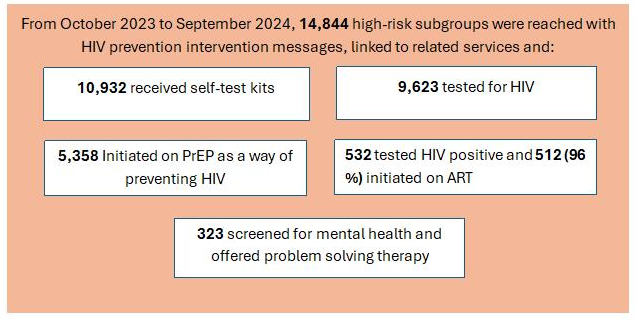
Screened 657 individuals at high risk for common mental disorders (between 2022 and 2024) and delivered Problem-Solving Therapy (PST) using the Friendship Bench model.
Referred and linked clients as needed to mental health and psychosocial services as part of integrated care.
Complementary & empowerment activities
Delivered economic-strengthening or livelihood-linked interventions and life-skills support as part of comprehensive engagement (supporting informed sexual health decision-making).
Outcomes
Capacity strengthened: Over 400 HCWs and 85 community cadres trained across 23 facilities increased facility trust and accessibility for high-risk groups.
HIV prevention scale: more 2 million condoms distributed; PrEP reach and initiations expanded dramatically (1,815 → 12,172 across 20 districts); 70%+ linkage to PrEP among eligible high-risk individuals; 52% month-1 PrEP continuation. CAB-LA demand created via pilots at 3 public sites.
Increased service uptake & linkage: 1,000+ outreach initiatives reached 34,350 high-risk individuals; 4,000+ HIV self-test kits distributed; 2,600+ screened for STIs with 99% linkage to treatment for positives.
Improved treatment outcomes: Peer support and adherence programming contributed to ≥95% of participants achieving undetectable viral load or low viremia.
Mental health integrated into services: 657 high-risk individuals screened and offered PST via Friendship Bench between 2022–2024.
Behavioural & empowerment impacts: Better community understanding of HIV prevention, reduced risky behaviour, and more informed sexual-health decision-making among target groups.
Monitoring and Evaluation
Use of data systems to monitor HIV care cascade: testing, linkage, retention, viral suppression.
Quality improvement and health system strengthening approaches embedded in implementation to enhance service delivery.
Continuous capacity building of health workers and community cadres for sustainability.
Resources
Access Care and Treatment Resources Here.